How many tools does your Security Operations Center (SOC) team open to investigate and resolve a single security incident?
For many organizations, the answer is five, six, or even more.
A typical investigation often requires analysts to move between a SIEM, ticketing software, communication platforms, dashboards, spreadsheets, documentation systems, and reporting tools. Every switch interrupts the investigation, slows collaboration, and increases the chance of missing critical information.
The problem isn't simply having multiple tools it's the operational complexity they create.
As cyber threats continue to grow in volume and sophistication, organizations don't just need better detection. They need better operations.
That's exactly why modern security teams are shifting toward a unified platform that centralizes workflows, improves collaboration, and accelerates incident management from beginning to end.
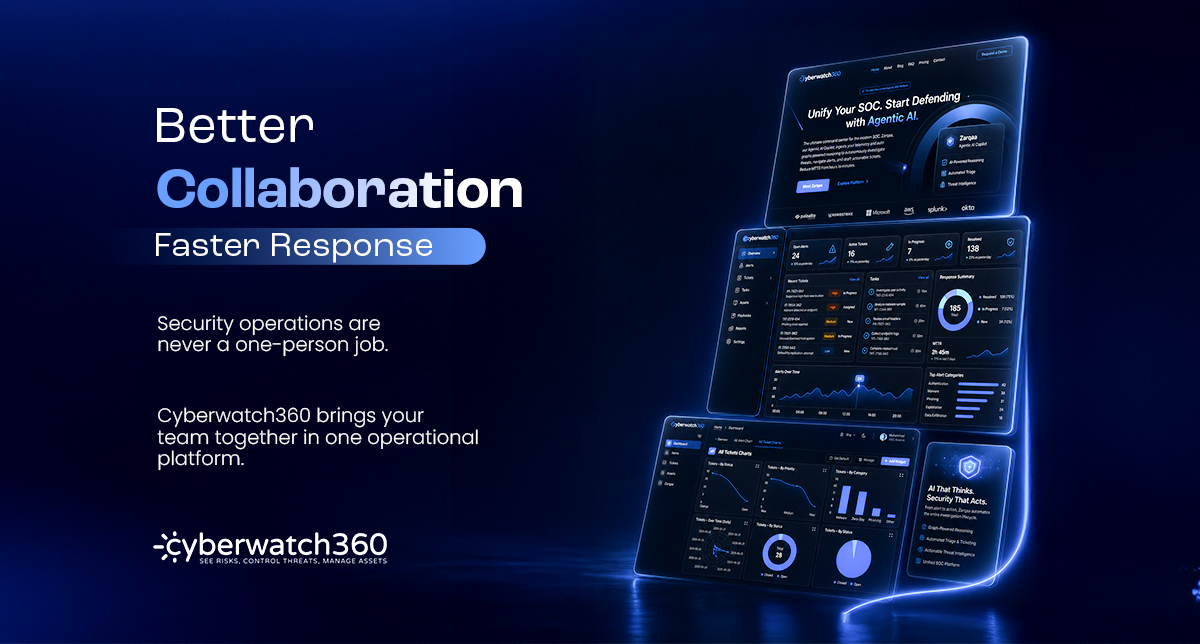
Cyberwatch360 was built around this philosophy: From Alerts to Action Instantly. Its mission is to simplify security operations by bringing alerts, ticketing, tasks, and intelligent automation into one platform powered by advanced Artificial Intelligence.
Most organizations invest heavily in security technologies.
Ironically, every new tool often creates another operational silo.
When analysts constantly move between disconnected systems, the cost extends far beyond lost productivity.
Common challenges include:
Instead of focusing on stopping real threats, analysts spend valuable time managing software.
The result is a slower Security Operations Center (SOC), even when the organization owns best-in-class security technologies.
Every security incident follows a familiar workflow:
In many environments, these eight steps happen across four to eight different applications.
Each handoff introduces delays.
Each manual action increases operational risk.
Over time, this fragmented process becomes one of the biggest obstacles to efficient incident management.
Detection is only the beginning.
Security teams also need:
Organizations increasingly recognize that improving operations often delivers a greater impact than simply adding another security product.
The goal isn't replacing every existing tool.
The goal is making them work together through a single operational experience.
Cyberwatch360 was designed to eliminate operational fragmentation.
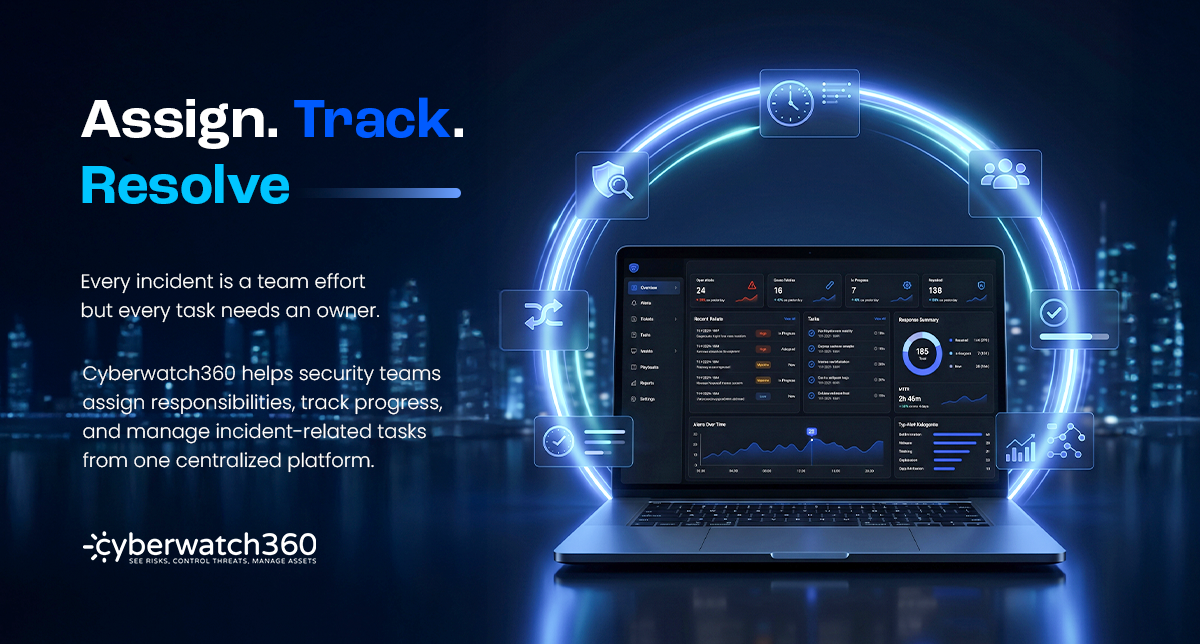
Rather than forcing analysts to jump between disconnected applications, the platform centralizes:
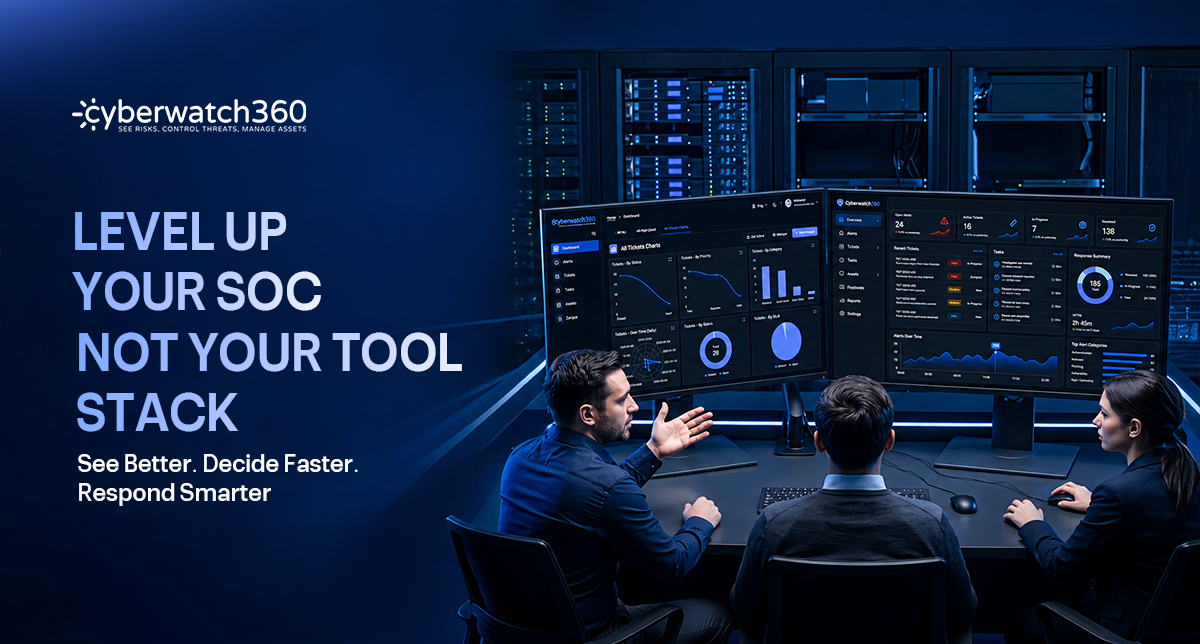
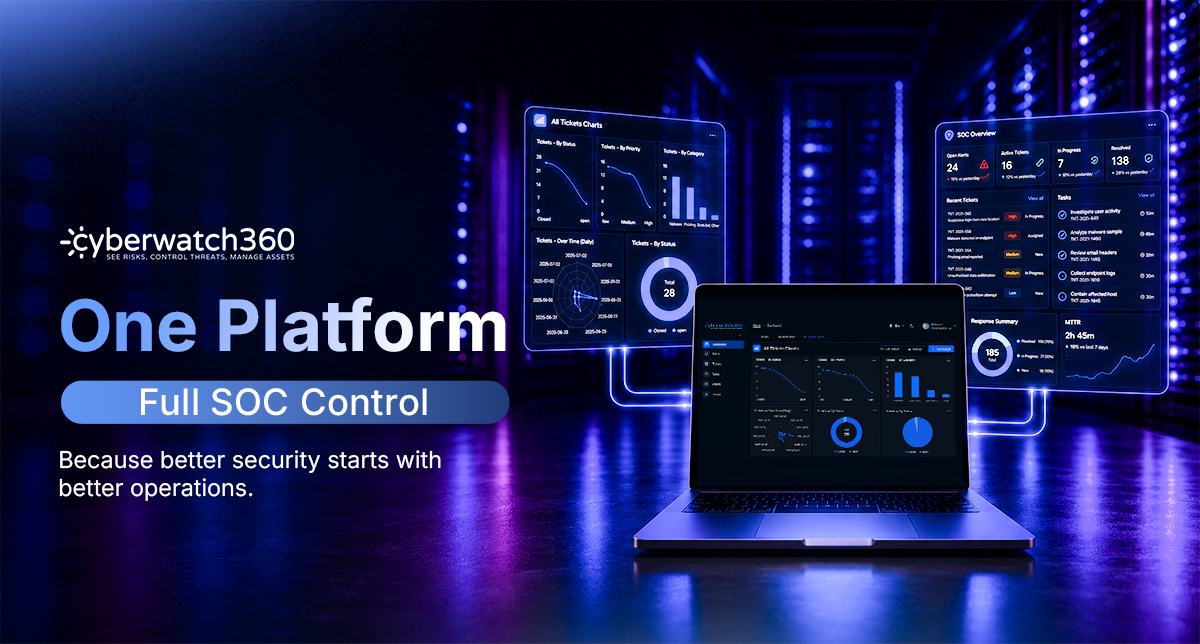
This unified platform enables analysts to manage the complete incident lifecycle from one workspace while continuing to integrate with their existing security investments.
Instead of replacing your SIEM or security stack, Cyberwatch360 complements it by providing the operational layer that many organizations are missing.
Security teams don't suffer from a lack of alerts.
They suffer from too many.
Cyberwatch360 leverages advanced Artificial Intelligence through Zarqaa AI to help security teams focus on what matters most.
Instead of overwhelming analysts with every event, the platform helps:
This allows analysts to spend less time sorting alerts and more time responding to genuine security risks.
Rather than replacing human expertise, Zarqaa AI acts as a force multiplier, enabling small security teams to achieve significantly more with the resources they already have. This aligns with Cyberwatch360's vision of combining AI-driven prioritization, centralized incident management, and automated threat detection in a single operational platform.
Many enterprise security platforms require months of implementation, complex integrations, and significant consulting resources before organizations begin seeing measurable results.
Modern businesses cannot afford that timeline.
Cyberwatch360 focuses on rapid time-to-value by offering an integrated operational platform that works alongside existing security technologies.
Organizations benefit from:
For lean security teams and Managed Security Service Providers (MSSPs), this rapid time-to-value means spending less time configuring infrastructure and more time delivering security outcomes. The platform's strategy emphasizes simplifying deployments while consolidating alerts, tickets, and tasks into a single operational workflow.
One of today's biggest cybersecurity challenges isn't technology.
It's people.
Many organizations struggle with limited security staff, growing workloads, and increasing operational demands.
Cyberwatch360 helps solve this challenge by acting as a force multiplier.
Instead of requiring additional analysts or costly integrations, the platform enables existing teams to:
Whether supporting an internal Security Operations Center (SOC) or an MSSP serving multiple customers, the platform helps teams scale operations without proportionally increasing costs.
Organizations often ask:
"How can we improve our security posture?"
The answer isn't always another security tool.
Sometimes it's improving how existing tools work together.
A centralized operational approach helps security teams:
When operations become simpler, security naturally becomes stronger.
Security operations shouldn't be slowed down by disconnected systems, manual processes, and fragmented workflows.
Cyberwatch360 brings alerts, tickets, tasks, collaboration, and advanced Artificial Intelligence into one unified platform, helping organizations streamline incident management, accelerate automated threat detection, achieve faster time-to-value, and empower every analyst with a true force multiplier.
Better cybersecurity doesn't begin with adding more tools.
It begins with making every tool and every analyst work smarter.