Modern security teams rarely suffer from a lack of security tools. In fact, most organizations have the opposite problem.
Security Operations Centers (SOCs) rely on a growing ecosystem of SIEM, EDR/XDR, cloud security platforms, identity tools, ticketing systems, and ITSM solutions. Each tool may perform its job effectively, but when these systems operate independently, security teams can spend more time managing the tools than responding to the threats they are designed to detect.
The result is operational complexity, disconnected workflows, duplicated effort, and slower response times.
The real challenge is no longer simply having the right security tools. It is making those tools work together efficiently.
A modern security environment can generate thousands of alerts and operational tasks across multiple systems. When these tools are disconnected, analysts may need to move between different dashboards, manually correlate information, update tickets, and coordinate actions across separate workflows.
This creates friction at every stage of security operations.
A potentially important alert might begin in an EDR platform, require additional context from a SIEM, involve cloud infrastructure, and eventually become a ticket in an ITSM system. Without a centralized operational layer, analysts are forced to connect the dots themselves.
For smaller security teams, this becomes an even bigger challenge.
Instead of spending valuable time investigating and responding to genuine threats, analysts can become overwhelmed by administrative work and repetitive processes.
Adding another security solution can solve a specific security problem, but it can also add another dashboard, another workflow, and another source of alerts.
Over time, organizations can end up with a sophisticated security stack that is difficult to operate efficiently.
The goal should not be to replace every tool your organization already trusts.
The goal should be to make the entire ecosystem work better together.
This is where a unified platform can transform day-to-day security operations.
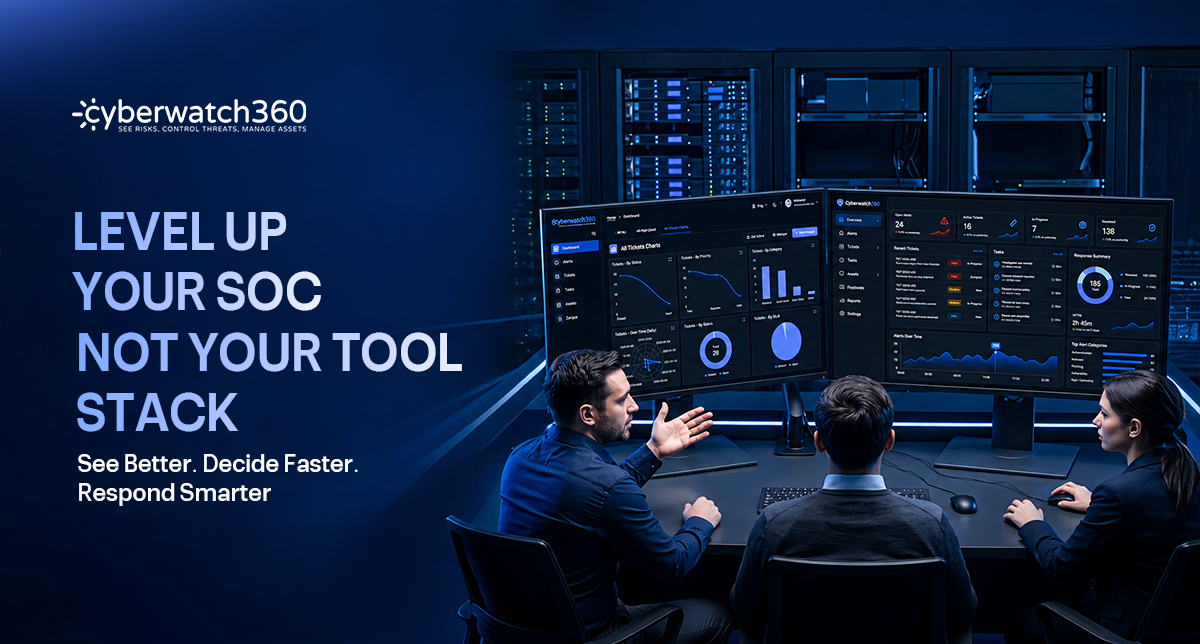
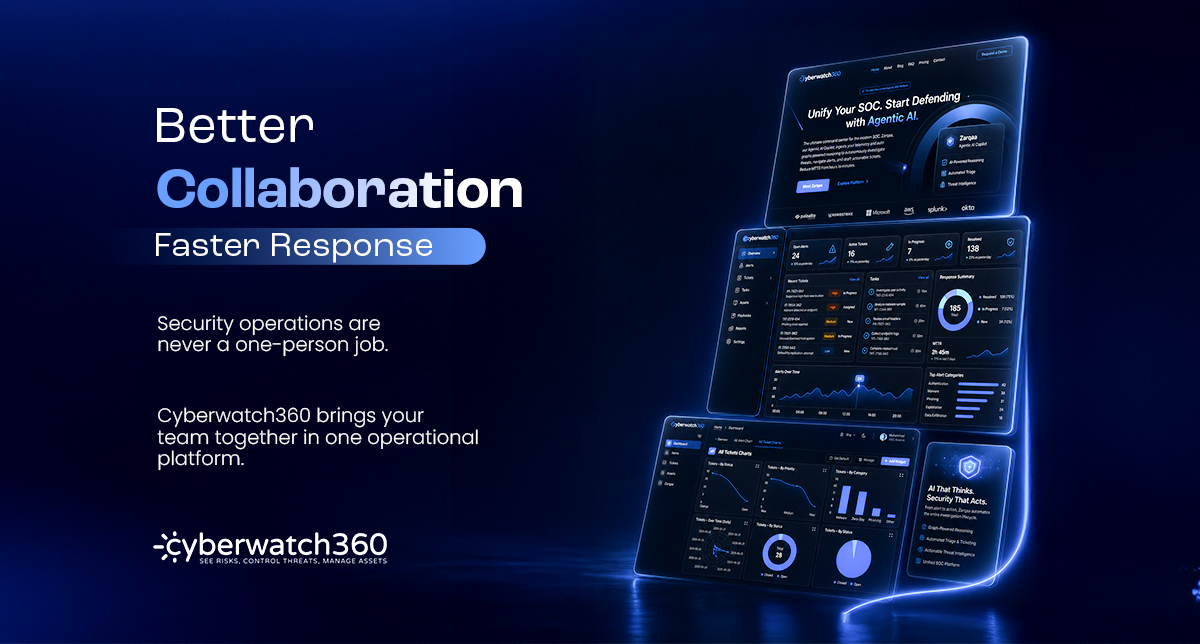
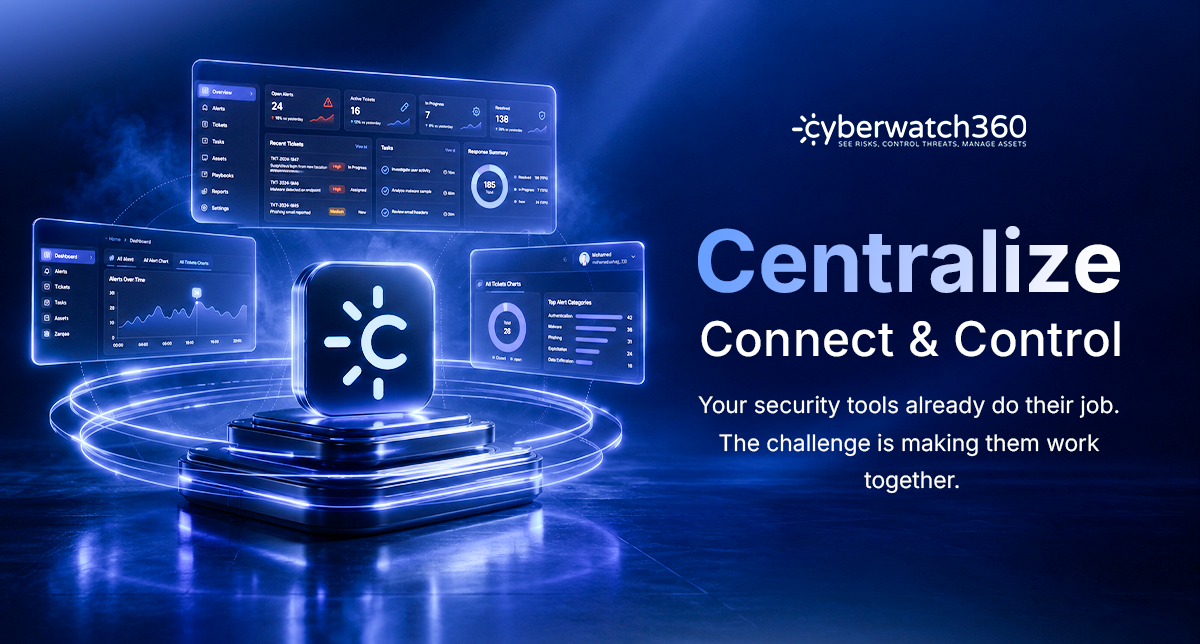
Cyberwatch360 provides a centralized operational layer that connects with your existing security ecosystem and brings alerts, tickets, and workflows together in one place.
Instead of forcing security teams to abandon the tools they already use, Cyberwatch360 helps them operate those tools more efficiently.
Your SIEM can continue doing what it does best.
Your EDR/XDR can continue protecting endpoints.
Your cloud security tools can continue monitoring your cloud environment.
Your ITSM platform can continue managing organizational workflows.
Cyberwatch360 connects these systems and gives your team a single operational environment for managing what happens next.
The difference between detecting a threat and effectively responding to it is often operational.
An alert by itself does not protect the business. Someone needs to understand it, prioritize it, investigate it, and take the appropriate action.
Cyberwatch360 is designed around this principle:
From Alerts to Action Instantly.
By bringing security alerts, tickets, and tasks into one centralized platform, teams can reduce the friction between detection and response.
Instead of asking:
Which system contains this alert?
or:
Where should we create the ticket?
security teams can focus on a more important question:
What should we do next?
Cyberwatch360 also uses advanced Artificial Intelligence through Zarqaa AI to help security teams deal with one of the biggest challenges in modern SOC environments: alert noise.
Not every alert represents a genuine threat.
When analysts have to investigate large volumes of low-value or repetitive alerts, important incidents can become harder to identify and prioritize.
Zarqaa AI helps filter the noise, highlight meaningful threats, and reduce unnecessary false alerts so analysts can focus their attention where it matters most.
This supports more effective automated threat detection while keeping human decision-making at the center of security operations.
The objective is not to replace security professionals.
It is to give them a smarter operational environment in which their expertise has greater impact.
Security teams are often expected to protect increasingly complex environments without a proportional increase in people or resources.
That is why efficiency matters.
Cyberwatch360 acts as a force multiplier, helping existing teams manage more effectively without requiring organizations to continuously expand their headcount or build expensive custom integrations between every security tool.
By centralizing operational workflows and reducing repetitive work, teams can spend more time on investigation, response, and improving their security posture.
For organizations with lean SOC teams, this can make a significant difference.
One of the biggest advantages of Cyberwatch360 is that organizations do not have to start from scratch.
You do not need to replace the security solutions your team already trusts.
You do not need to rebuild your entire technology stack.
Instead, Cyberwatch360 works with your existing ecosystem and provides the operational layer needed to bring those systems together.
This approach can reduce disruption while helping organizations achieve faster time-to-value from their existing security investments.
Effective incident management requires more than detecting suspicious activity.
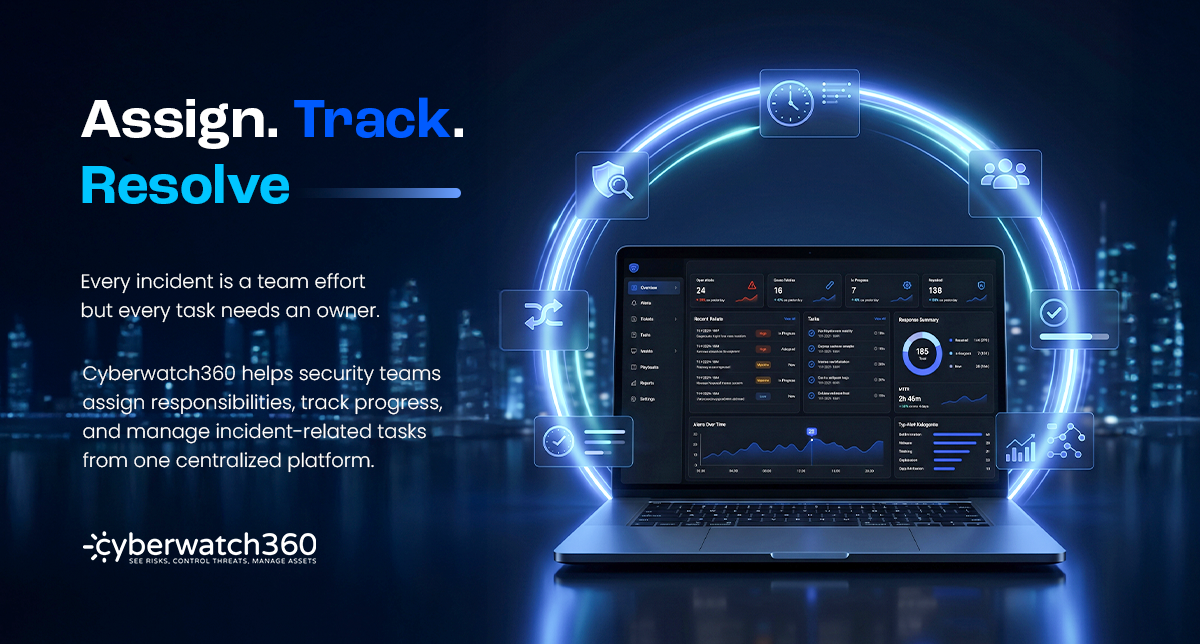
Security teams need visibility into what has been detected, what has already been investigated, which tasks are pending, who is responsible, and what actions need to happen next.
When this information is spread across multiple platforms, maintaining that visibility becomes difficult.
Cyberwatch360 brings these operational elements together so teams can manage incidents through a more connected workflow.
Alerts can become actionable tasks.
Tasks can become tracked incidents.
Incidents can move through defined workflows.
And security teams can maintain greater visibility without constantly switching between disconnected systems.
Security technology should support the way your organization operates not force you to rebuild everything around a new platform.
Cyberwatch360 is designed with this principle in mind.
Your existing security investments remain valuable. The platform simply helps connect them into a more efficient operational environment.
This means organizations can continue working with the technology stack they trust while gaining the centralized visibility and workflow management they need.
The result is a simpler approach to security operations:
Keep the tools you trust. Connect them. Centralize the work. Act faster.
The future of security operations is not necessarily about adding more tools.
It is about getting more value from the tools you already have.
A Security Operations Center (SOC) needs visibility, coordination, prioritization, and speed. When security tools operate in isolation, these capabilities can become harder to achieve.
Cyberwatch360 provides a unified operational platform that connects your existing security ecosystem, simplifies incident management, reduces alert noise with advanced Artificial Intelligence, and helps security teams move from detection to action more efficiently.
Whether you are operating a dedicated SOC or managing security with a lean internal team, the objective remains the same:
Protect the business without creating unnecessary operational complexity.
Your security tools already do their job.
Cyberwatch360 helps them work better together.
Connect the security ecosystem you already trust, centralize your alerts and workflows, and give your team the operational visibility they need to respond with confidence.
Ready to simplify your security operations?
Request a Cyberwatch360 demo or schedule a consultation to see how our unified platform can help your team reduce complexity, improve incident management, and turn your existing security stack into a more efficient security operation.
Cyberwatch360 .. From Alerts to Action Instantly.